 資料來源:
三民書局
資料來源:
三民書局
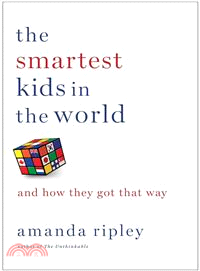
The smartest kids in the world : and how they got that way / Amanda Ripley
- 作者: Ripley, Amanda
- 出版: New York : Simon & Schuster c2013
- 主題: Comparative education , Education , Comparative education , Education--Finland , Education--Korea (South) , Education--Poland
- 版本:First Simon & Schuster hardcover edition
- ISBN: 9781451654424 (hbk.): NT||911 、 1451654421 (hbk.) 、 9781451654431 (pbk.) 、 145165443X (pbk.) 、 9781451654448 (e-book)
- URL:
電子書
電子書
電子書
- 一般註:Includes bibliographical references (pages 239-254) and index.
-
讀者標籤:
- 系統號: 000775010 | 機讀編目格式
館藏資訊

本館視聽資料與可外借圖書提供預約服務,每張借閱證總共可預約10冊(件)。
密集書庫中不可外借圖書提供調閱服務,每張借閱證總共可調閱10冊(件)。
如預約/調閱圖書或視聽資料因破損、遺失等因素無法借閱時,本館將以電子郵件或電話簡訊通知讀者取消該筆預約/調閱申請。
Following three teenagers who chose to spend one school year living and learning in Finland, South Korea and Poland, a literary journalist, through their adventures, discovers startling truths about h
摘要註
Following three teenagers who chose to spend one school year living in Finland, South Korea, and Poland, a literary journalist recounts how attitudes, parenting, and rigorous teaching have revolutionized these countries' education results. In a handful of nations, virtually all children are learning to make complex arguments and solve problems they've never seen before. They are learning to think, in other words, and to thrive in the modern economy. What is it like to be a child in the world's new education superpowers? In a global quest to find answers for our own children, the author, a Time magazine journalist follows three Americans embedded in Finland, South Korea, and Poland for one year. Their stories, along with groundbreaking research into learning in other cultures, reveal a pattern of startling transformation: none of these countries had many "smart" kids a few decades ago. Things had changed. Teaching had become more rigorous; parents had focused on things that mattered; and children had bought into the promise of education.--Publisher information. How do other countries create "smarter" kids? In a handful of nations, virtually all children are learning to make complex arguments and solve problems they've never seen before. They are learning to think, in other words, and to thrive in the modern economy. What is it like to be a child in the world's new education superpowers? In a global quest to find answers for our own children, the author, a Time magazine journalist follows three Americans embedded in these countries for one year. Kim, fifteen, raises